Breathless Tales
When the Humiliated Maid Turns Out to Own the Mansion
When the Humiliated Maid Turns Out to Own the Mansion
The Night the Chandeliers Trembled
The Whitmore estate did not merely sit upon the hill; it commanded the city below like a stone sentinel with arms open to the night. On this particular evening, the neo-classical facade was bathed in a cascade of warm, golden light, making the building appear less like a residence and more like a monument to unchecked privilege. Inside, the air was thick with the scent of expensive perfume, aged paper, and the intoxicating fog of hubris. The ballroom, a cavern of white marble and gilded mirrors, hummed with the low, rhythmic thrum of a string quartet. Crystal chandeliers hung from the vaulted ceiling, dropping thousands of tiny stars down onto a sea of couture silk, tailored wool, and polished intellect. This was not just a party; it was a coronation. The Whitmores, architects of a real-estate empire built on shrewd acquisitions and seamless legal maneuvering, used their philanthropic galas as stages where power was displayed with the ease of a silk gown slipping over a shoulder. Here, the elite did not mingle; they merged, their ambitions intertwined, their secrets shared in whispers that sounded like applause.
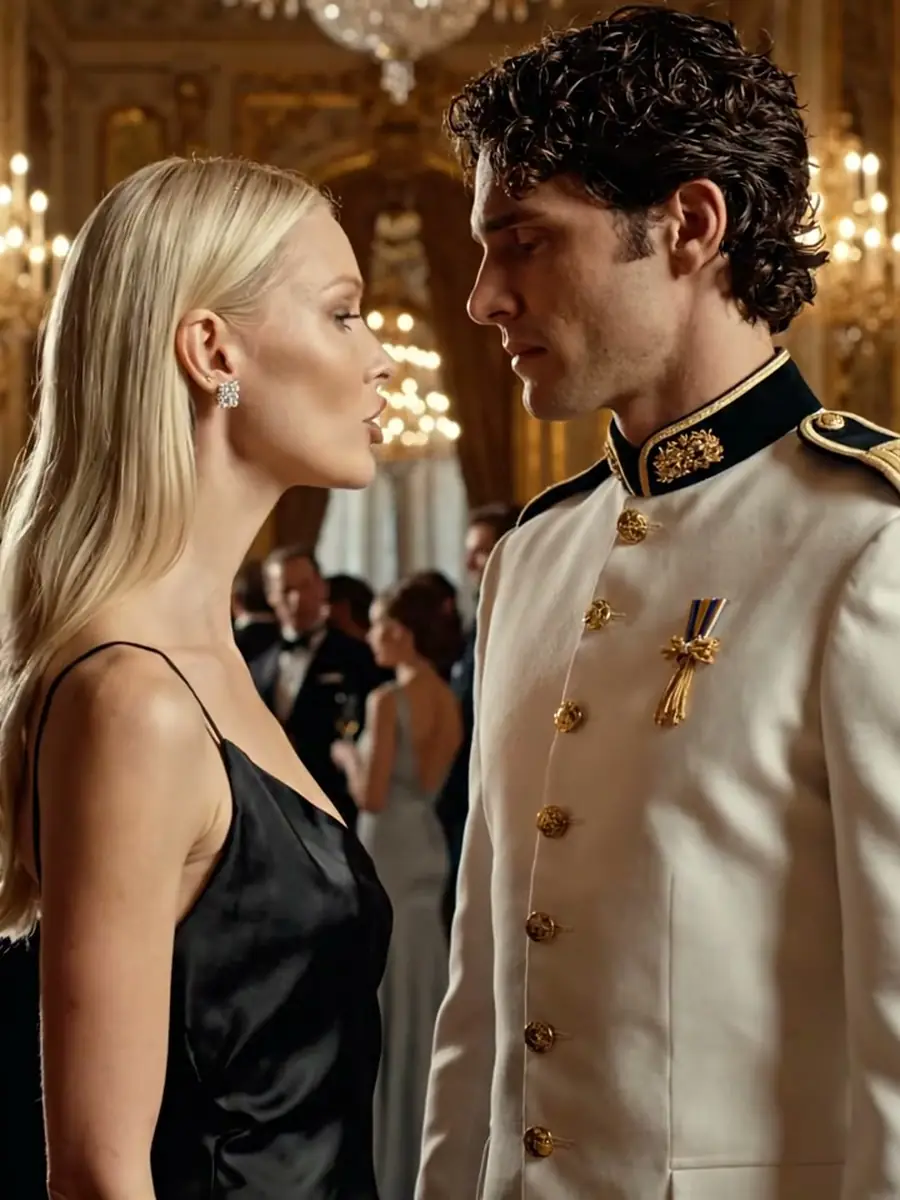
Isabella Whitmore stood at the epicenter of this gilded web. At twenty-three, she was the heir apparent, a portrait of modern aristocracy rendered in platinum blonde hair and flawless, porcelain skin. She wore a sleek black silk cocktail dress, the fabric shifting like liquid shadow with every movement, embellished with subtle diamond studs that caught the light with a predatory glint. Her posture was a lesson in entitlement, her chin lifted just enough to dismiss the room while maintaining the illusion of engagement. She scanned the crowd with bored, dark eyes, her smile a practiced mask that never quite reached the depth of her gaze. To her, the mansion was not a home but an extension of her own ego, a backdrop for a life that had never asked for permission to exist.
The Servant in the Shadows
While the guests danced in the spotlight, a different rhythm pulsed in the service corridors that skirted the ballroom’s perimeter. Here, in the dimly lit antechamber, Alexander moved. He was the mansion’s head housekeeper, a role inherited not through blood, but through a lineage of service that had kept the Whitmore name immaculate for three generations. Yet, there was a dignity to his movement that belied his station. He wore a pristine white uniform, tailored to a precision that borderlined on the sacred, the crisp fabric catching the ambient light as he carried a silver tray of hors d’oeuvres. A discreet gold-threaded brooch sat on his chest, a subtle anchor to the family’s history, though he wore it with the restraint of a man guarding a state secret. His dark curls were pulled back, exposing a forehead lined with a calm, watchful intensity. His deep brown eyes did not look at the food he carried, but at the space between the guests, reading the room with a clarity that those in a hurry often missed.
Alexander had grown up in the walls of this estate, listening to the murmurs that traveled through the plaster. His grandmother, a former housekeeper whose hands were worn raw from decades of labor, had whispered the truth to him in the quiet hours before dawn. She had spoken of a forgotten deed, a legal anomaly tucked away in the labyrinth of the family’s archives, signed decades ago by a man named Arthur Whitmore. The name matched Alexander’s own surname, a coincidence that had transformed into a heavy, silent burden on his shoulders. The mansion, they said, was held in a trust for Arthur’s direct descendants—a line that, through an obscure genealogical twist, led directly to the young man now serving champagne to people who did not know his name. He had inherited the responsibility of safeguarding the estate’s legacy, not its ownership, but the truth remained locked in a safe deposit box, waiting for a moment that might never come.
A Slip of Glass and Silk
The crisis arrived not with a bang, but with the quiet shatter of glass. In the service corridor, a slight misstep, perhaps caused by the polished floor or the weight of the tray, sent a crystal glass of champagne tumbling from his hand. The liquid splashed across the marble, a bright, effervescent stain that spread rapidly, catching the eyes of the assembled guests who happened to be lingering near the open archway. The sound was small, but in the hushed reverence of the ballroom, it echoed like a gunshot. A collective gasp rose from the crowd, a ripple of shock that quickly soured into curiosity, and then, inevitably, into ridicule. Snickers broke out, low at first, then growing louder, turning the atmosphere from celebratory to carnivorous.

Isabella, perched on a plush velvet settee just a few yards away, did not look away. She watched the spill, the motion of the servant, the gathering of onlookers, with a cold assessment that felt surgical. She lifted her chin, cutting through the murmurs with a voice that was icy, clear, and dripping with disdain. “You really can’t even hold a glass, can you?” The words were not shouted, yet they carried the weight of a verdict. They hung in the air, sharp and unforgiving, stripping away the anonymity of the service staff and pinning Alexander to the spot. The guests turned their heads, a physical shift in the room’s gravity, all eyes converging on the two figures separated by the distance of class and cruelty.
The Weight of the Truth
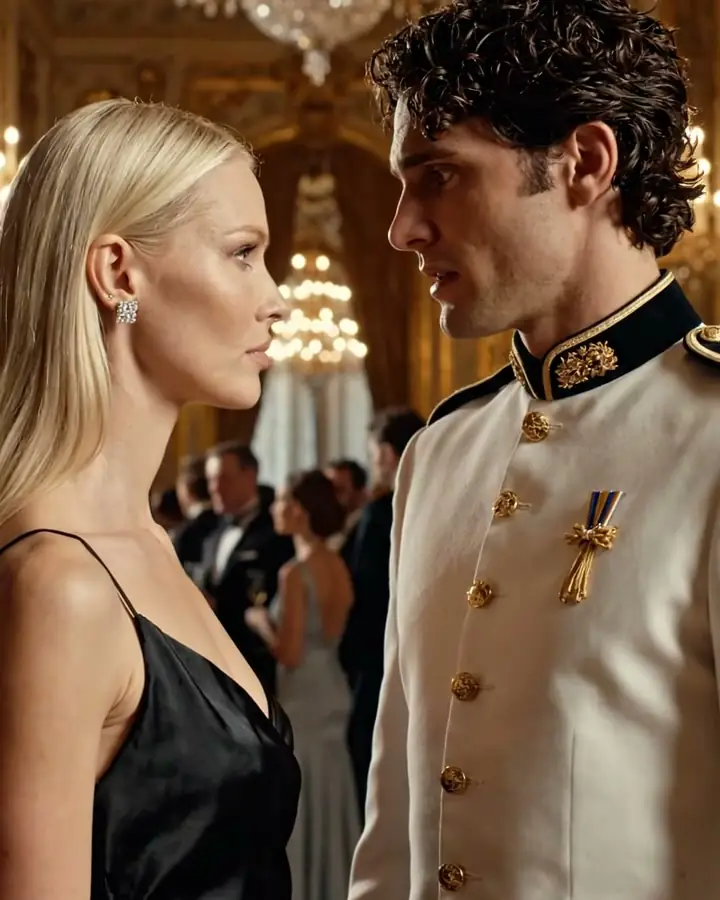
For a heartbeat, time seemed to suspend itself. Alexander did not drop the tray. He did not stammer an apology or bow his head in the traditional display of subservience. Instead, a flush rose to his cheeks, not from shame, but from a restrained fire that had been banked for years. He looked at Isabella, and in that gaze, there was no fear, only a profound, sorrowful clarity. He knew the secret. He knew that the woman mocking him was standing on land that, by the letter of a forgotten law, belonged to his bloodline. The deed, that fragile parchment bearing the Whitmore seal, was not just a document; it was a key. He had chosen to keep it buried, hoping that time would soften the edges of his existence, but the moment had passed. The humiliation was not a mistake; it was an invitation. If he did not speak, the silence would become his identity, and he was done being a ghost in his own house.
Alexander stepped forward, the marble floor absorbing the weight of his shoes. He moved with a slow, deliberate grace, ignoring the snickers that had resumed around him. He approached Isabella, not with aggression, but with the stillness of a mountain. The crowd, sensing a shift in the dynamic, fell silent. The snickers died in their throats, replaced by a tense, electric anticipation. Isabella’s eyes narrowed, her boredom replaced by a flicker of irritation at the disruption. She expected him to beg, to apologize, to disappear into the shadows from which he had emerged. She did not expect him to stop three feet from her settee, to look down at her with a gaze that held the weight of centuries, and to speak.
Thunder in a Quiet Room
“You’ll never belong here,” Isabella said, her voice dropping to a whisper that was no less cutting for its volume. “You’re just a servant.” The words were a final line in the sand, a declaration of her superiority and his irrelevance. She waited for the crumble, the sign of weakness that she so often saw in those she deemed beneath her. But the smile she expected never came. Alexander’s face remained composed, a mask of dignity that was more terrifying than any outburst. He drew a breath, the air in the room seeming to thin, and then, in a tone that was measured, calm, and resonant, he replied.
“Actually, this house bears my name.”
The sentence did not explode; it settled. It landed in the hearts and minds of the guests like a stone dropped into a still pond, sending ripples of confusion and then shock. The words hung in the air, a quiet thunder that shattered the illusion of the night. Isabella’s face drained of color. The practiced smile vanished, replaced by a mask of disbelief that she could not hide. She looked at him, really looked at him, for the first time, and saw not a servant, but a man who held the keys to her reality. The guests shifted, their eyes darting between the two figures, the dynamic of the room inverted in a single, devastating sentence.
No one moved. No one spoke. The quartet continued to play, the music now sounding discordant and strange against the silence of the crowd. Alexander did not elaborate. He did not need to. The truth did not require explanation; it only required acknowledgment. He turned slowly, his white uniform immaculate against the dark opulence of the ballroom, and walked away. He did not run. He did not argue. He simply left, leaving Isabella alone on her velvet settee, surrounded by a crowd that now looked at her not with admiration, but with the sudden, chilling realization that the ground beneath her feet was unstable.
The New Dawn
In the weeks that followed, the Whitmore family’s public image did not just crack; it dissolved. The legal battles that ensued were fierce, litigious, and widely covered by the press. The forgotten deed was produced, verified, and enforced. The mansion, the symbol of the family’s unchecked power, was transferred to its rightful owner. Isabella, stripped of the title she had never truly earned, found herself facing a world that had previously revolved around her presence. She was no longer the center of the universe, but a peripheral figure in a drama that had finally found its true protagonist.
Alexander, now recognized as the rightful heir of the estate, did not seek revenge. He did not lock the doors or fire the staff. Instead, he chose a path that surprised both his critics and his former guardians. He retained the mansion but transformed its purpose. The gala halls were opened, the velvet ropes removed. He converted the neo-classical palace into a cultural center, a space where the community that had once watched him from the shadows could now enter, learn, and thrive. The ballroom, where the champagne had spilled, became a gallery for local artists. The service corridors, where his dignity had been questioned, became workshops for community outreach.
The night of the gala became a legend in the city, a cautionary tale and a triumph in one. It served as a reminder that power is fragile, that humiliation can be a mask for hidden strength, and that the quietest voices often hold the loudest truths. The Whitmore name remained, but its meaning had shifted, no longer a symbol of exclusion, but a testament to the fact that belonging is not granted by birth, but claimed by truth. And in the marble halls, the echo of that single sentence—*this house bears my name*—still lingered, a reminder that every wall has a story, and every servant has a soul.
◆ ◆ ◆
Fiction. Any resemblance to real persons or events is purely coincidental.