Breathless Tales
The Deed That Saved a Lifetime: A Power Play Reversed
The Deed That Saved a Lifetime: A Power Play Reversed

Downtown Confrontation: The Lobby That Became a Stage
In the heart of the city, the newly erected glass‑fronted tower rose like a polished mirror, reflecting the relentless pulse of downtown life. Its marble lobby, cool and immaculate, was a crossroads for the city’s movers and shakers—executives clutching leather portfolios, baristas balancing steaming cups, and commuters slipping through the revolving doors with the rhythm of a thousand hurried steps. Amid this choreography of commerce, a singular tableau unfolded that would halt the flow of ambition for a few breath‑holding minutes.
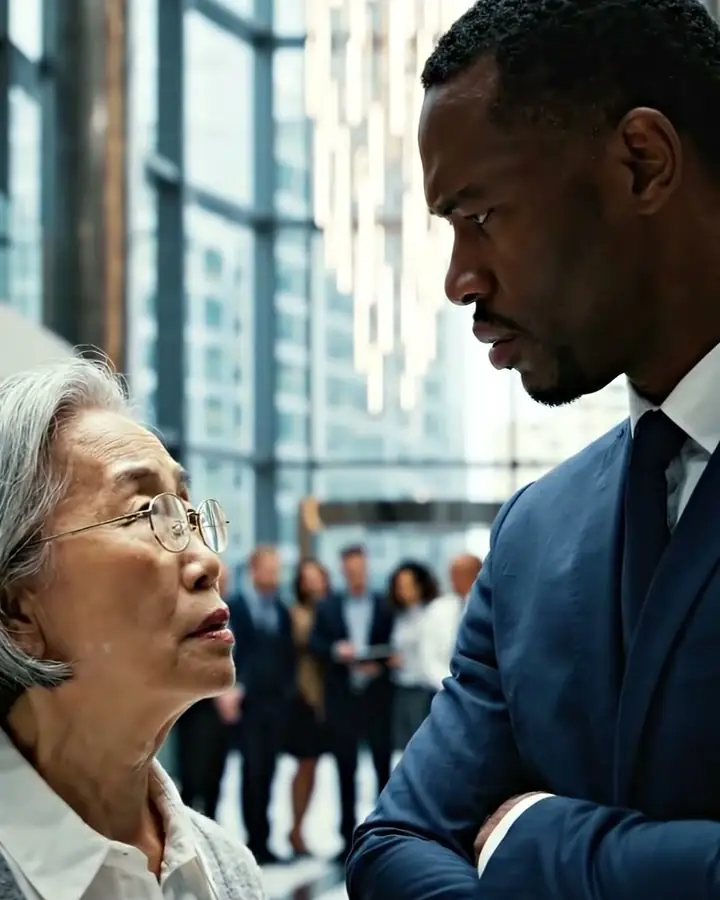
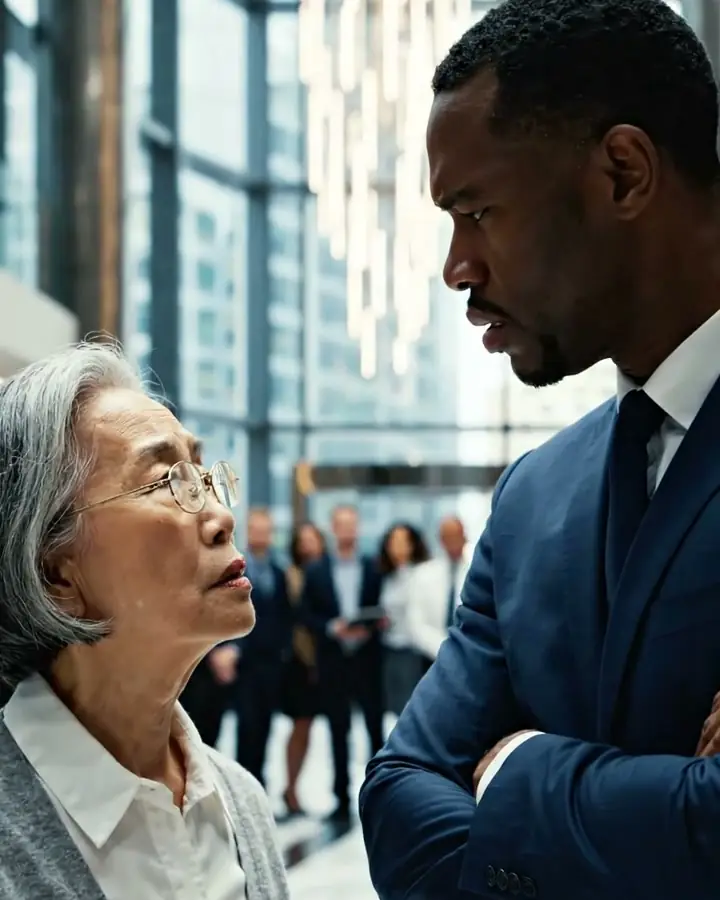
On the left side of the marble expanse stood Eleanor Whitaker, a 72‑year‑old woman whose presence seemed to have been drawn from the very bricks beneath her feet. Her silver‑threaded bob was neatly tucked beneath a soft gray cardigan, and the round glasses perched on her nose amplified the quiet intensity in her gaze. Clutched in her hands was an old, creased deed—its paper yellowed, its edges frayed like the memory of a promise long forgotten.
Opposite her, a stark contrast of youth and corporate power, Victor Hale, a 34‑year‑old senior manager, wore a sharp navy suit without a tie, his white shirt crisp against the polished surface of his polished tablet. His hair was trimmed with military precision, his arms crossed, and his eyes burned with a blend of confidence and impatience. The crowd that gathered around them—silhouettes in tailored suits—watched with a collective curiosity that seemed to swell in the vaulted ceiling above.
The Deed’s Hidden History
Victor had arrived on a mission that was as routine as it was ruthless. The board of the multinational corporation that owned the tower had decided to evict the last remaining tenant of the building’s original entrance—a modest second‑floor apartment that had housed Eleanor for forty‑five years. Their plan was simple: demolish the aging façade and replace it with a glass‑encased atrium that would showcase the company’s forward‑thinking image, a beacon of progress that would eclipse any remnants of the past.
When Victor approached Eleanor with a sleek tablet displaying the eviction notice, her voice, though trembling, cut through the hum of the lobby. “I own this building, you can’t force me out,” she whispered, the words barely louder than a leaf rustling in a gust.
Victor’s smile tightened into a practiced line. “Your lease ends tomorrow, we have orders,” he replied, his tone polished but cold, the kind of language that could dissolve neighborhoods in a boardroom.
What seemed at first a straightforward clash of corporate might against a fragile elderly tenant took an unexpected turn when Eleanor produced the deed. The paper bore a signature Victor recognized instantly—his own grandfather’s.
When Past and Present Collide
Arthur Hale, Victor’s grandfather, had been a towering figure in the city’s real‑estate world of the 1950s. His name was etched into archives, his signature a staple on countless deeds that shaped the skyline. The signature on Eleanor’s deed was unmistakable, yet the date—decades earlier than any record Victor could recall—made his heart skip. A faint watermark of an old family crest, one he had only ever seen in a black‑and‑white photograph hanging in his childhood home, shimmered beneath the ink.
“This can’t be right,” Victor murmured, stepping closer, his voice barely audible over the whisper of the air‑conditioning. “My grandfather never owned this property.”
Eleanor’s gaze never wavered. “He did. He gave it to his sister, my mother, when he realized this street would become a sanctuary for artists, not a profit machine.” The revelation rippled through the silent crowd, turning curiosity into a low murmur that rose and fell like a tide.
Victor’s mind raced. He pulled his phone from his pocket, his fingers moving with practiced speed as he accessed the company’s digital archives. Within seconds, a hidden clause from a 1962 contract surfaced—a life‑tenancy clause that transferred ownership to “E. Whitaker, sister of A. Hale, for life tenancy.” The clause had been buried beneath layers of later amendments, effectively erased from public knowledge.
“So… you’re my great‑aunt?” Victor asked, a mixture of disbelief and awe threading his voice.
Eleanor nodded, a faint smile breaking through the lines that had been etched by time. “Your grandfather was a good man, Victor. He saw the future but also the past. He wanted his sister to keep a piece of this city’s soul.” In that moment, the balance of power shifted. The young executive, once the embodiment of corporate authority, found himself humbled by a familial bond that transcended profit.
The Board’s Dilemma and the Turn of the Tide
Victor turned toward the board’s representative—a stoic woman in a charcoal suit—holding the deed aloft like a shield. “We cannot proceed with demolition,” he declared, his voice steadier now, resonating with a conviction that surprised even himself. “The building is bound by a life‑tenancy clause that belongs to Eleanor Whitaker.”
The board’s lawyer, a seasoned professional accustomed to navigating corporate labyrinths, paused. The marble lobby, which had been a silent witness to countless transactions, now seemed to hold its breath. After a brief, tense moment, the lawyer’s tone softened into resignation. “We will honor the clause,” she said. “The project will be revised to preserve the historic façade.”
Victor returned to Eleanor, offering her a seat at the conference table where the new development plans would be discussed. Together, they drafted a partnership that would incorporate the building’s heritage into the modern design—a public gallery that would celebrate the city’s artistic past while framing the sleek glass atrium. The crowd, once silent, erupted into a quiet applause, faces reflecting a collective relief that felt almost reverent.
Building Bridges: From Conflict to Collaboration
In the weeks that followed, the corporate architects, city planners, and community artists gathered around a massive drafting table. Eleanor, with her weathered deed and quiet authority, guided the conversation, insisting that the original brick façade be retained as the centerpiece of the new atrium. Victor, now acting as a liaison between the board and the community, found himself navigating a delicate balance of corporate ambition and cultural stewardship.
The design that emerged was a testament to compromise and respect. The glass walls of the atrium would frame the historic brick, allowing natural light to illuminate the original structure as if it were a treasured photograph set against a modern backdrop. Inside, a gallery would showcase portraits of Arthur Hale, Eleanor Whitaker, and the countless unnamed workers who had built the city—each image a reminder that progress is never built in a vacuum.
When the plans were finally presented to the board, the same charcoal‑suit lawyer who had once defended demolition now praised the proposal’s ingenuity. “We have preserved the city’s soul while embracing its future,” she said, her voice carrying a note of genuine admiration.
Epilogue
Months later, the tower’s new atrium opened to the public, its glass walls framing the original brick façade like a cherished photograph. The gallery inside resonated with the quiet hum of visitors, their footsteps echoing against polished stone as they paused before portraits of Arthur Hale, Eleanor Whitaker, and the nameless laborers whose hands had raised the city’s skyline. Victor, now a senior partner, often lingered at the entrance, watching the sunlight dance across the bricks and remembering the day a single piece of paper had altered the course of his life.
Eleanor, seated in her favorite armchair by the window, watched the crowds with eyes that glistened—not just from the triumph of victory, but from the unexpected reconnection with a family she had thought lost to time. The deed that once seemed a relic had become a bridge between generations, proving that true power lies not in the ability to evict, but in the humility to listen, to remember, and to honor the stories written into the very foundations of a city.
◆ ◆ ◆
Fiction. Any resemblance to real persons or events is purely coincidental.