Breathless Tales
The Mob Boss's Granddaughter Reached for a Stranger. Then the Waitress Saw the Key on His Hand.
Baby Gia never went to strangers. But the night she reached for a quiet waitress humming an old lullaby, a feared man's tattoo unlocked a secret thirty-two years old.
The Song Nobody Should Know
Friday nights at Casa Lucarelli on Federal Hill in Providence, Rhode Island, were loud in the way only an old Italian restaurant can be loud. Glasses clinked under brass lamps. Waiters slid between white tablecloths.
Marisa Kane, thirty-one, short auburn hair and a spray of freckles across her nose, worked the floor the same way she did everything: quietly, and without complaint. Double shifts. Rent due in nine days. When the dining room got too loud, she hummed under her breath, an old tune her mother used to sing in the kitchen. She didn't even know she was doing it most nights.
The corner table by the window was reserved every Friday. Nobody ever asked for whom.
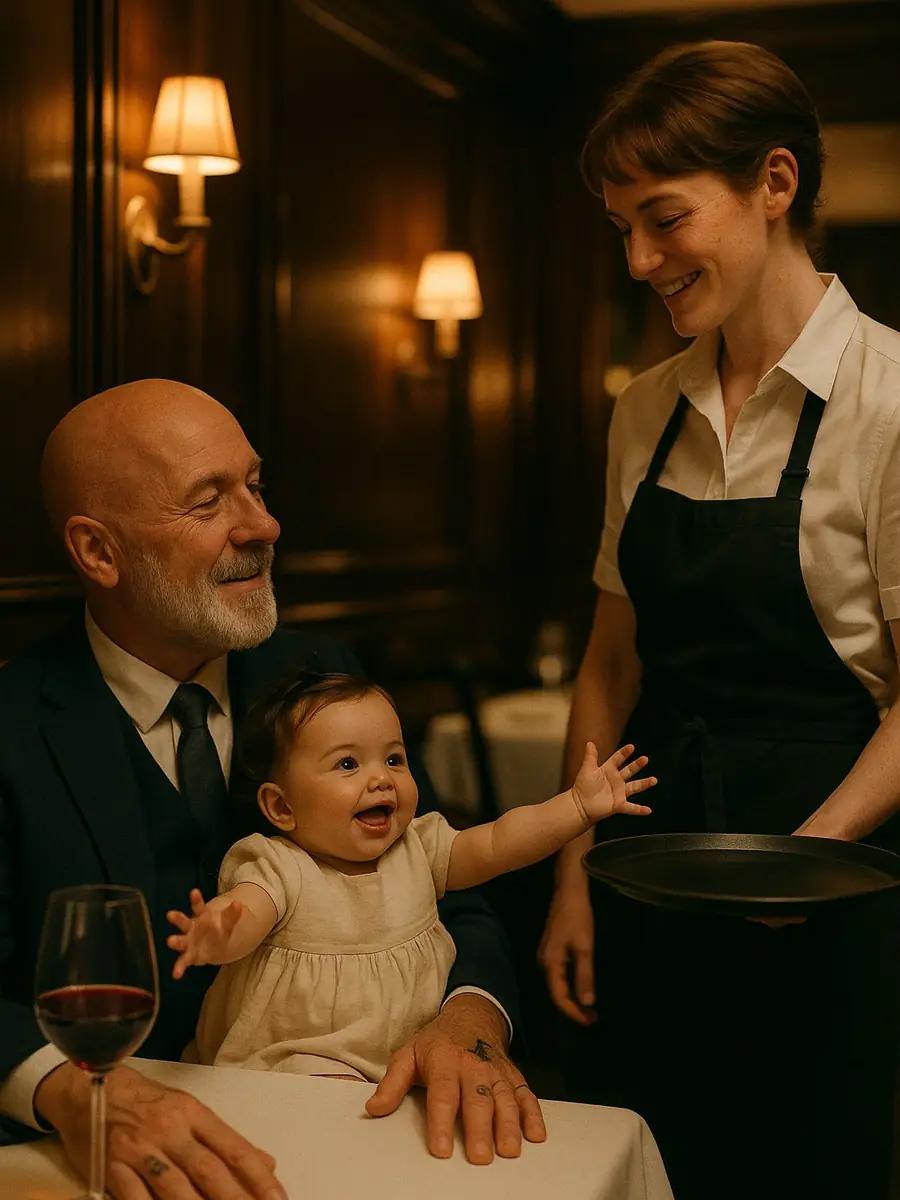
Augusto Bellandi was sixty-three, bald, with a trimmed white beard and a navy three-piece suit that fit like it had been made around him, because it had. Two men in dark suits sat at the next table, eating slowly and watching the door. In Providence, people lowered their voices when they said his name.
Tonight, on his knee, sat a ten-month-old girl in a cream dress with a tiny bow in her dark curls. His granddaughter, Gia.
Marisa set down a glass of Barolo, still humming.
Gia turned. Her eyes went wide. Then she smiled, a huge, gummy, delighted smile, and stretched both arms toward Marisa as if she'd known her all her life.
"She Never Goes to Strangers"
Marisa laughed and offered a finger. Gia grabbed it with both hands and cooed.
Augusto didn't move. His face, the one the whole neighborhood knew, did something nobody in the room had ever seen it do. It went soft with surprise.
"She never goes to strangers," he said. "Never. Not to my own men. Not to her own aunt."
"Maybe she likes the song," Marisa said.
"What song?"
Marisa hummed a few notes. Gia bounced and squealed.
Augusto's hand tightened on the edge of the table. "I sing her that song every night," he said slowly. "It's from a village in Calabria that doesn't exist anymore. My mother made it up. There are maybe four people alive who know it."
Marisa smiled, uncertain, and looked down at the hand on the tablecloth.
On the back of it, between the knuckles and the wrist, was a small tattoo in faded black ink. An old-fashioned key.
The Key
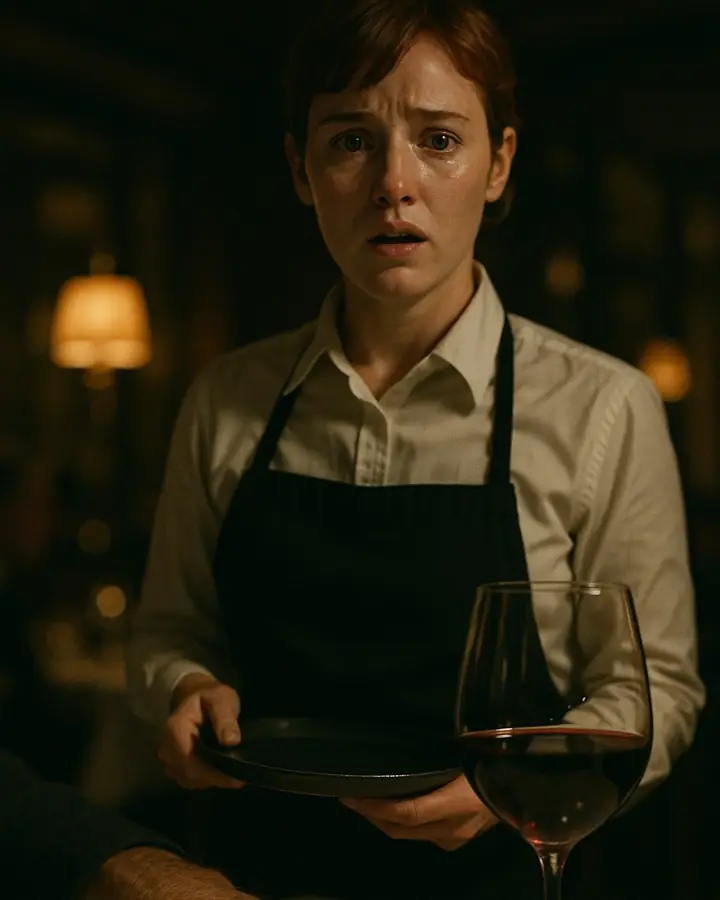
The color left Marisa's face so fast that one of the men at the next table stood up.
She pulled her finger from Gia's grip. The tray in her other hand began to tremble, the empty glasses chiming against each other.
"Sit down, Paulie," Augusto said, without looking at him. Then, to her, quietly: "Why are you looking at my hand like that?"
Marisa's eyes filled. Her voice came out barely above a whisper.
"My mother told me that if I ever saw a man with a black key on his hand, I should walk away and never come back."
The restaurant noise seemed to fall away. Augusto stared at her the way a man stares at a photograph he thought had burned.
"What was your mother's name?"
Marisa didn't answer. She set the tray down on the service station, untied her apron, and walked out the back door into the November cold.
The Girl Who Ran
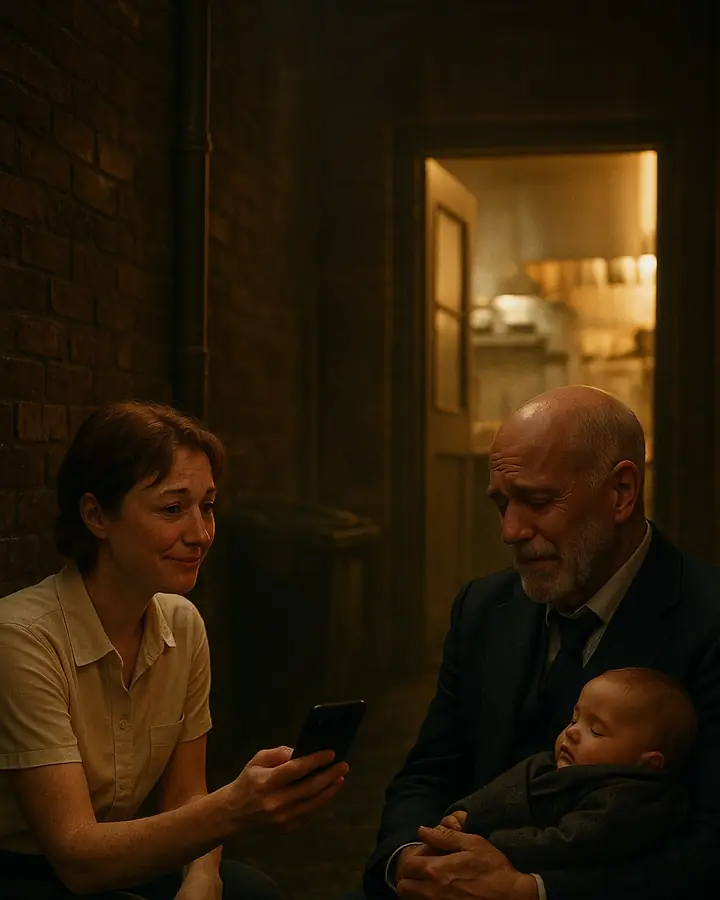
Augusto found her ten minutes later, sitting on a milk crate in the alley. He came alone. He held Gia, wrapped in his own coat, and the baby reached for Marisa again, smiling.
"Her name was Teresa," Marisa said, before he could ask. "She had a scar on her chin from falling off a bicycle on Atwells Avenue. She's alive. She runs a bakery in Fall River. She made me promise."
Augusto sat down on an overturned crate across from her, slowly, like his knees had given out.
"Teresa Bellandi," he said. "My little sister."
He told her the rest in the cold, with the kitchen fan rattling overhead.
In 1994 their father ran the family, and he had arranged a marriage for seventeen-year-old Teresa to the son of a business partner. Teresa refused. Their father did not accept refusals. So one night, thirty-one-year-old Augusto drove his sister to the bus station with two thousand dollars in an envelope and a promise: never call, never write, never come back. If the family couldn't find her, it couldn't use her.
"The key," he said, turning his hand over. "Every man in my father's house got one at eighteen. It meant you belonged to him. I told her: if you ever see this key, it means they found you. Run."
He had never broken the promise. He had searched quietly for thirty years, never asking anyone who might talk, and never found her. She had done exactly what he told her.
"She sang that song to me every night," Marisa said.
"She learned it from our mother," Augusto said. "Same as me. Same as Gia."
Thirty-Two Years
"Your father," Marisa said. "Is he..."
"Gone eleven years," Augusto said. "And so is his business. I spent a decade closing it, one door at a time, so this one" — he nodded at Gia, who was asleep now against his chest — "would never get a key."
Marisa looked at the faded ink for a long time.
"I'm not asking you for anything," he said. "Tell her I'm sorry it took so long. That's all."
Marisa took out her phone. Her thumb hovered for a full minute. Then she pressed call.
"Ma? Don't hang up. I'm with someone." She held out the phone. "It's okay. He's the one who drove you to the bus."
The Bakery in Fall River
Three Sundays later, a black sedan parked on a narrow street in Fall River, outside a bakery with a hand-painted sign that read Teresa's.
The bell over the door rang. A small woman of forty-nine, with flour on her apron and a thin white scar on her chin, stood behind the counter and did not move.
Augusto Bellandi, the man Providence lowered its voice for, stood in the doorway holding his granddaughter and couldn't say a word.
Teresa came around the counter first. She put both hands on his face, the way she had at the bus station thirty-two years earlier.
"You got old," she said.
"You got a bakery," he said, and both of them started to laugh and cry at the same time.
Gia reached out from his arms, smiling, toward the great-aunt she had never met.
Behind the counter, Marisa started to hum. One by one, the old song filled the little shop, and for the first time in thirty-two years, the whole family sang it together.
◆ ◆ ◆
Fiction. Any resemblance to real persons or events is purely coincidental.