Breathless Tales
From Maid to Master: The Unseen Inheritance at the Gala
From Maid to Master: The Unseen Inheritance at the Gala
Gala of the Whitmore Estate: A Night of Glitter and Secrets
In the heart of Manhattan, the Whitmore Estate unfurled its annual summer gala beneath a canopy of crystal chandeliers that threw prisms of light across the marble-floored ballroom. The event, a tradition spanning three generations, was the epitome of opulence: a live string quartet whispered melodies through the gilded arches, tables groaned under platters of truffle‑infused delicacies, and the city’s most powerful figures glided in designer gowns and sharply tailored suits. Conversations swirled like champagne bubbles—mergers, political backroom deals, and the occasional whispered scandal. Yet amid the glitter and the roar of polite applause, a quiet tension lingered, as if the very walls sensed an unspoken story waiting to surface.
The Unassuming Entrance of Maya Patel
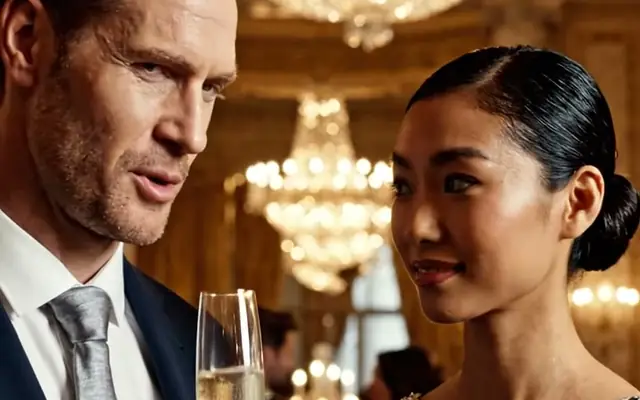
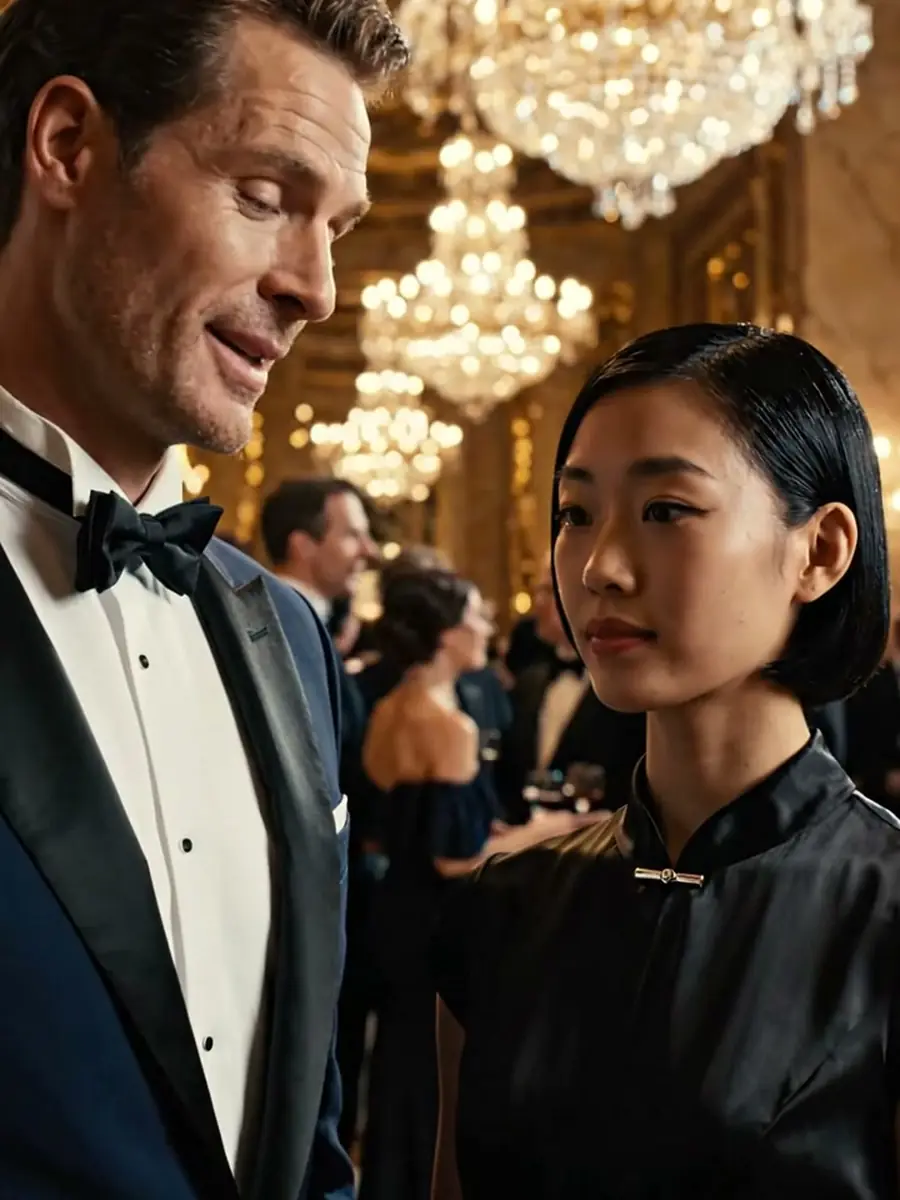
Maya Patel slipped through the revolving doors of the Whitmore estate with a poise that belied the modest nature of her position. Hired only weeks earlier to tend to the sprawling kitchen staff, she wore a simple black silk dress, its cut elegant yet deliberately plain. A delicate silver clasp secured the hem, and a silver tray of meticulously arranged appetizers balanced in her hands. Her almond‑shaped eyes, dark and observant, scanned the sea of polished faces with a practiced smile, but an undercurrent of resolve pulsed beneath the surface. Maya moved through the throng with the quiet confidence of someone accustomed to navigating invisible boundaries, aware that every step placed her under the scrutiny of a world that rarely afforded her a voice.
Mockery in the Spotlight
The ballroom’s attention converged on the head of the banquet where Julian Whitmore, heir apparent and charismatic scion of the Whitmore lineage, raised his crystal glass. Tall, with a chiseled jaw and short dark hair, he cut a striking silhouette in his crisp navy tuxedo, the subtle silk lapels catching the warm glow of the chandeliers. “To the Whitmore legacy,” he announced, his voice resonating across the hall. As Maya passed by, Julian’s gaze lingered a moment longer than decorum required. A ripple of murmurs traveled through the gathering, and a cluster of high‑society influencers leaned in, their tones dripping with sarcasm. “You’re out of place, darling,” Julian said, his smile a veneer of politeness. “This is a night for owners, not for waiters.”
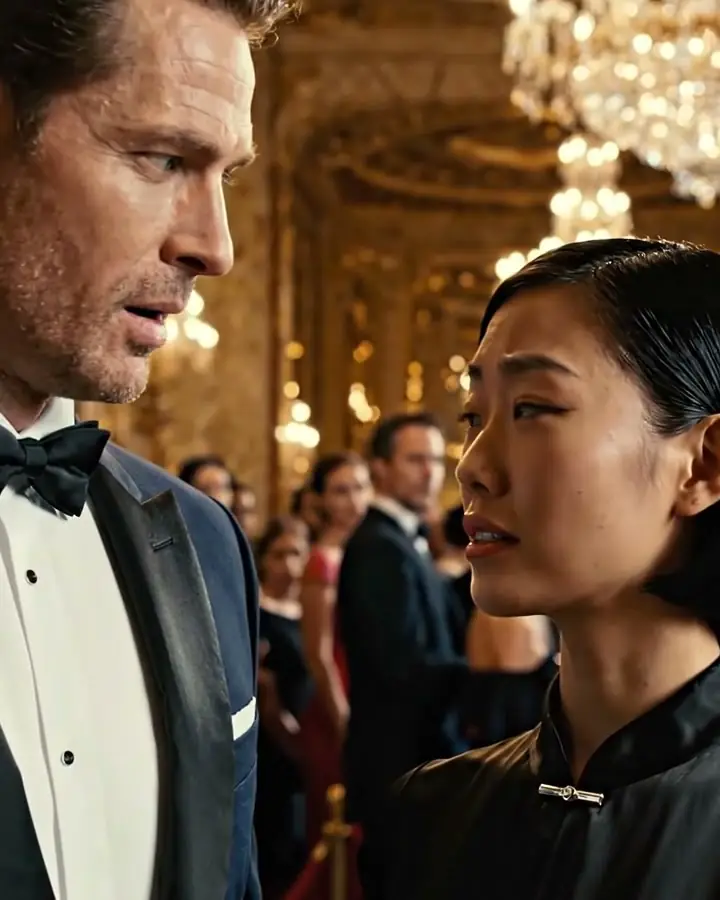
Maya’s response was soft yet unflinching. “I’m just here for the dinner,” she replied, her voice carrying a calm steadiness that seemed to momentarily pause the room’s chatter. The brief flash of defiance caught the eye of a few curious onlookers, while the majority remained silent, their judgment hanging in the air like an unseen weight.
The Unveiling of a Hidden Heir
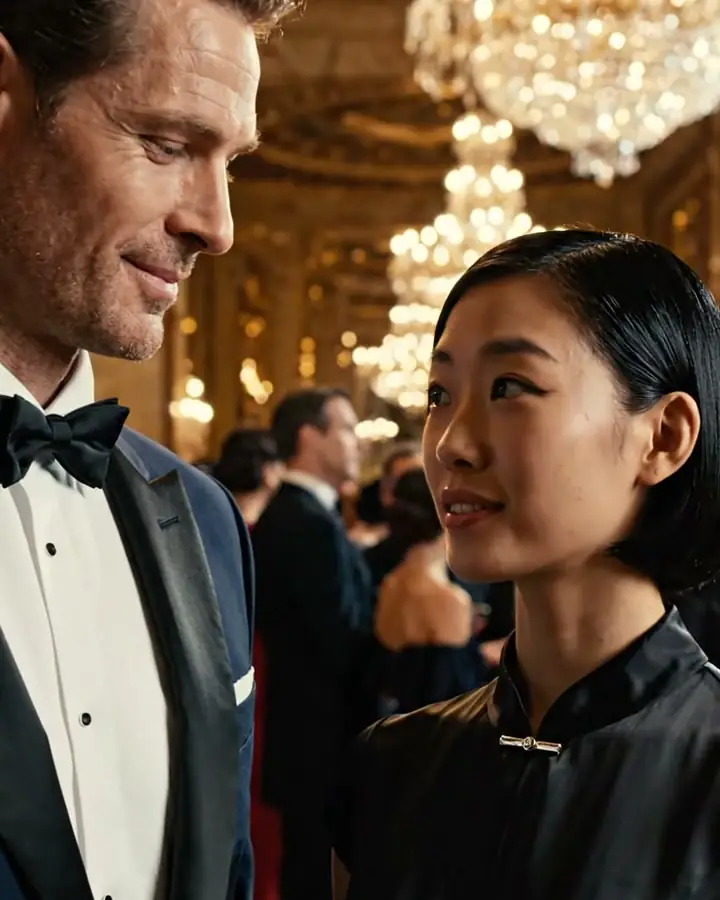
As the evening progressed, Maya slipped away from the main tables and found refuge in a secluded corner near the ornate, paneled wall. Her fingers brushed the smooth fabric of her dress, and she withdrew a thin, embossed card from a hidden pocket—a card that bore an intricate family crest and a name that sent a shiver through the room’s collective consciousness. “I’m the heir. This is my home,” she whispered, her voice steady and resonant, reverberating against the marble and the hushed murmurs of the guests.
Julian’s composure fractured. His face drained of color as the weight of Maya’s revelation settled over him like a cold draft. “Impossible…” he stammered, his earlier arrogance evaporating in an instant. Behind Maya, a concealed door creaked open, revealing a series of legal documents and a large, oil‑painted portrait that bore an uncanny resemblance to her—her mother’s eyes, her father’s jawline, the unmistakable lineage of the Whitmore name.
The ballroom erupted into a chorus of gasps and bewildered whispers. The maid, once the subject of ridicule, now stood as the rightful owner of the Whitmore Estate, a secret safeguarded for decades by a contested will and a deliberate veil of anonymity. The revelation transformed the gala from a showcase of wealth into a live courtroom drama, with every guest suddenly thrust into the role of juror and witness.
Redefining Power: Aftermath and Redemption
In the moments that followed, Julian bowed his head, his pride humbled before the truth. Maya took her place at the head of the table, the silver tray now a symbol of authority rather than servitude. The guests, their earlier judgments dissolving, offered congratulations that rang with genuine reverence. The atmosphere shifted from one of opulent display to a collective acknowledgment of justice finally surfacing.
In the weeks that followed, Maya embarked on a comprehensive restructuring of the estate’s management. She elevated the long‑standing staff members who had served faithfully, granting them positions of greater responsibility and recognition. The charitable foundations she had quietly supported throughout her years of modest service received newfound attention and funding, aligning the Whitmore name with philanthropy rather than exclusivity. The estate, once a bastion of elite isolation, blossomed into a hub of inclusivity, its doors opening wider to the community it had long overlooked.
Epigraphic Celebration: A New Gala
Months later, the Whitmore ballroom once again glittered under the same chandeliers, but the purpose of the gathering had irrevocably changed. This gala was not a celebration of wealth; it was a tribute to stories of ascent, of individuals who rise from humble beginnings to claim their rightful place. Maya stood at the center of the room, radiant in a bespoke gown that mirrored the elegance of the estate’s history while forging a new narrative. Her smile reflected the warm highlights and deep shadows cast by the chandelier’s glow, embodying both the legacy of the past and the promise of the future.
The crowd, now fully aware of the truth, cheered not merely for the estate’s prosperity but for the triumph of integrity over prejudice. The night that began with mockery concluded with a legacy that would inspire generations—a testament that lineage is not solely defined by blood, but by the courage to claim one’s rightful inheritance and to reshape it for the greater good.
◆ ◆ ◆
Fiction. Any resemblance to real persons or events is purely coincidental.