Breathless Tales
Three Inmates Pushed the 68-Year-Old Newcomer to the Ground. Then the Warden Walked Into the Yard and Called Her "Mrs. Winslow."
Hazel Winslow didn't complain when they took her sweater or emptied her bag. When three women knocked her down in the yard, she only said, "You should stop." Nobody laughed for long.
The New Old Woman
Hazel Winslow didn't protest when they took her cardigan.
She didn't say a word when they dumped out her paper bag of belongings on the first night: reading glasses, a Bible with a cracked spine, three letters tied with string. She simply picked everything up again, one item at a time.
She was sixty-eight years old, small and straight-backed, with white hair cut short and the calm eyes of someone who had seen far worse than a prison dormitory. She had been transferred to Cedar Hollow Women's Correctional in Missouri to serve the final months of a twenty-two-year sentence she had never once appealed.
Tasha Varner noticed her on the first day.
Tasha was twenty-three, loud, and the unofficial queen of the east yard. She liked new arrivals who were afraid of her. Hazel didn't seem afraid of anything. That was a problem.
The Yard
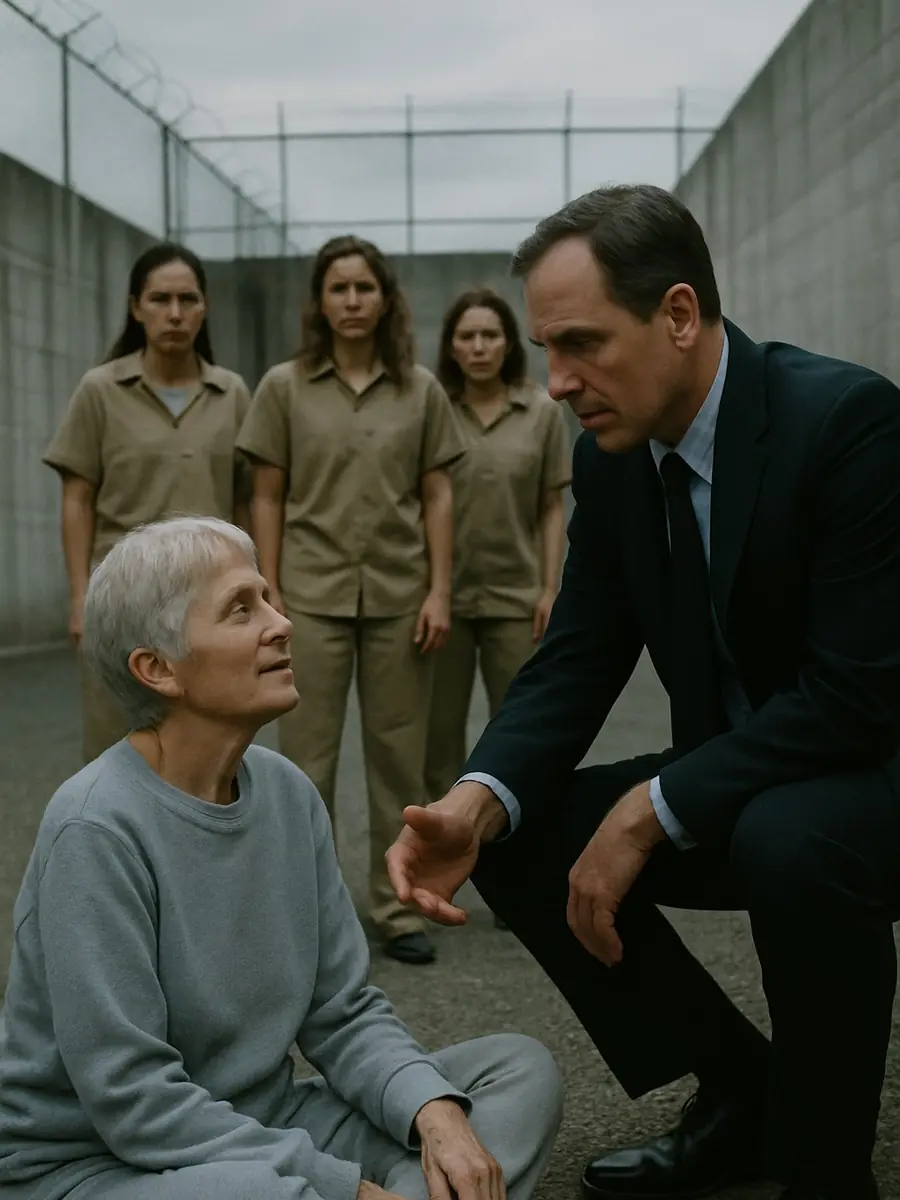
On Hazel's fourth morning, Tasha and two of her friends cornered her by the fence, out of view of the guard tower. One of them knocked the coffee cup from Hazel's hand. Another shoved her shoulder. Hazel lost her balance and sat down hard on the gravel.
For the first time, she looked up.
"You should stop," she said.
The youngest of the three burst out laughing. "Why? You gonna call somebody, Grandma?"
At that exact moment, the heavy steel doors of the yard swung open.
The warden walked in. In person. Warden Curtis Faraday almost never came down to the yard. Every inmate knew his face from the posters in the hallway, and nobody had ever seen him walk this fast.
He saw Hazel on the gravel. His face changed completely.
"Who did this?"
Nobody answered.
He crossed the yard, knelt down and took Hazel's hand.
"Mrs. Winslow," he said quietly, "are you hurt?"
"His Father Was My Lawyer"
The whole yard froze.
Tasha whispered, "Winslow?"
The warden helped Hazel to her feet and brushed the gravel from her sleeve. "I asked for you to be brought in quietly," he said. "I'm sorry."
Hazel straightened her collar. "Clearly, someone had other plans."
A guard came running up, out of breath. "Sir, you know her?"
The warden didn't answer. Hazel answered for him.
"His father was my lawyer."
Warden Faraday went pale.
"Mrs. Winslow, please, not here."
"Here is exactly where it should be, Curtis," Hazel said. "Your father wanted it this way."
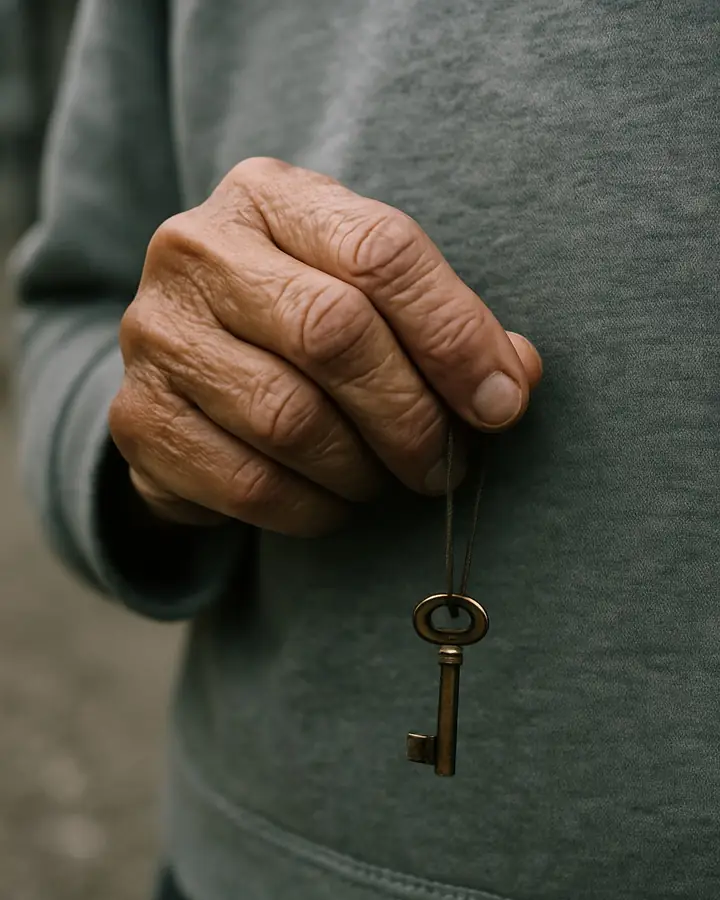
She reached into the hem of her gray sweatshirt, where she had carefully stitched a seam on the bus that morning, and pulled out a small brass key on a thread.
The warden recognized it instantly.
The Safe
For more than twenty years, a small iron safe had sat in a corner of the warden's office at Cedar Hollow. It had been placed there by the old warden, Curtis's predecessor, at the request of an attorney named Raymond Faraday, who happened to be Curtis's father. A sealed court instruction was taped to the top: Not to be opened except in the presence of Hazel Winslow.
Raymond Faraday had died six weeks ago. His last letter to Hazel had told her to request this transfer, and to bring the key.
They opened the safe that afternoon in front of a county judge and two witnesses.
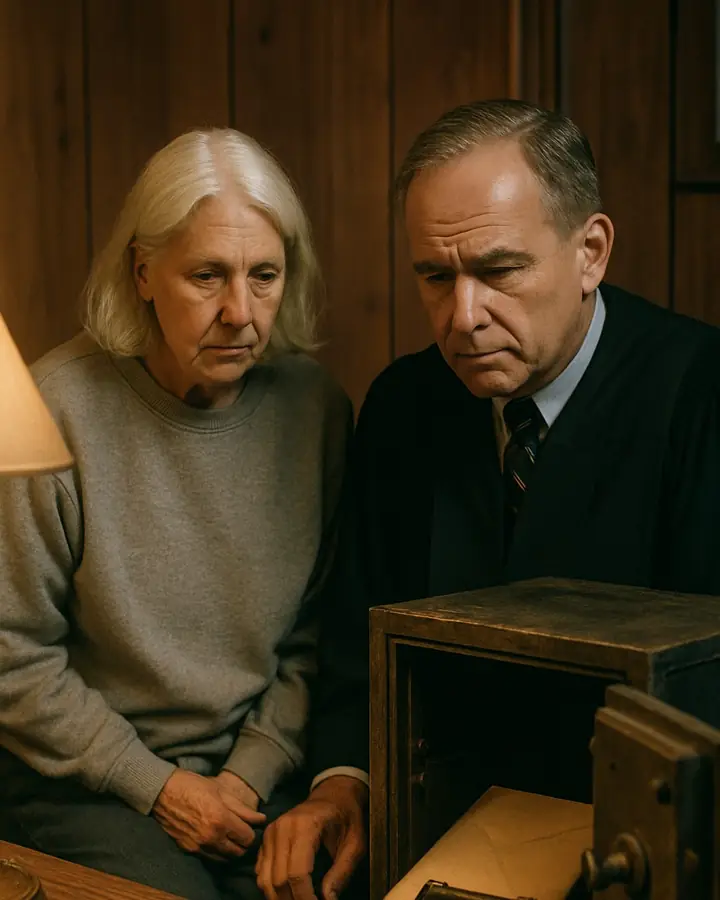
Inside was a thick envelope, an old cassette tape and a sworn statement.
Twenty-two years earlier, more than four million dollars had disappeared from the Cedar County Farmers' Cooperative. Hazel had been the bookkeeper. Every signature on the transfers looked like hers. She had been convicted in three days.
But the real thief had come to her lawyer the night before the trial. Drunk, frightened, he had confessed everything, and Raymond Faraday had secretly recorded him. The man then made one threat: if Hazel fought the charges, her teenage daughter would pay for it.
So Hazel chose silence. And Raymond, bound by her wishes, locked the truth in the one place nobody would look for it, to be opened when the danger was gone.
The man had died last spring.
His name was Gilbert Varner.
Tasha
Tasha Varner was brought to the warden's office that evening. She stood in the doorway with her arms crossed, ready for punishment.
Hazel was sitting by the window.
"Your grandfather took everything from me," she said. "My job. My name. Twenty-two years of my daughter's life."
Tasha's jaw trembled. She had grown up hearing that her grandfather was a respected man, a church deacon, a pillar of the county.
"I didn't know," she whispered.
"I know you didn't," Hazel said. "His sins aren't yours, child. But what you do with the next twenty years is."
Hazel Winslow walked out of Cedar Hollow as a free woman eleven days later, her conviction overturned. Her daughter, now forty, was waiting at the gate with two grandchildren Hazel had only ever seen in photographs.
A few months later, a letter arrived at Hazel's new address. It was from Tasha. She had signed up for the prison's bookkeeping course.
At the bottom, she had written: I want to learn how to make the numbers tell the truth.
◆ ◆ ◆
Fiction. Any resemblance to real persons or events is purely coincidental.