Breathless Tales
Hidden Button, Shattered Legacy: The Secret That Changed Everything
Hidden Button, Shattered Legacy: The Secret That Changed Everything
Introduction: A Night of Glamour and Mystery
Manhattan’s elite gathered beneath the vaulted marble arches of the Whitmore mansion for the annual Whitmore Gala, an event that had, for generations, signaled the convergence of power, wealth, and immaculate taste. The sprawling gallery, an architectural masterpiece of polished stone and soaring chandeliers, was draped in contemporary canvases and vintage tapestries, each piece a silent witness to the family’s storied triumphs. Yet beneath the gleaming surface, the walls seemed to hold a breath of something older—an echo of secrets that had long been sealed away.
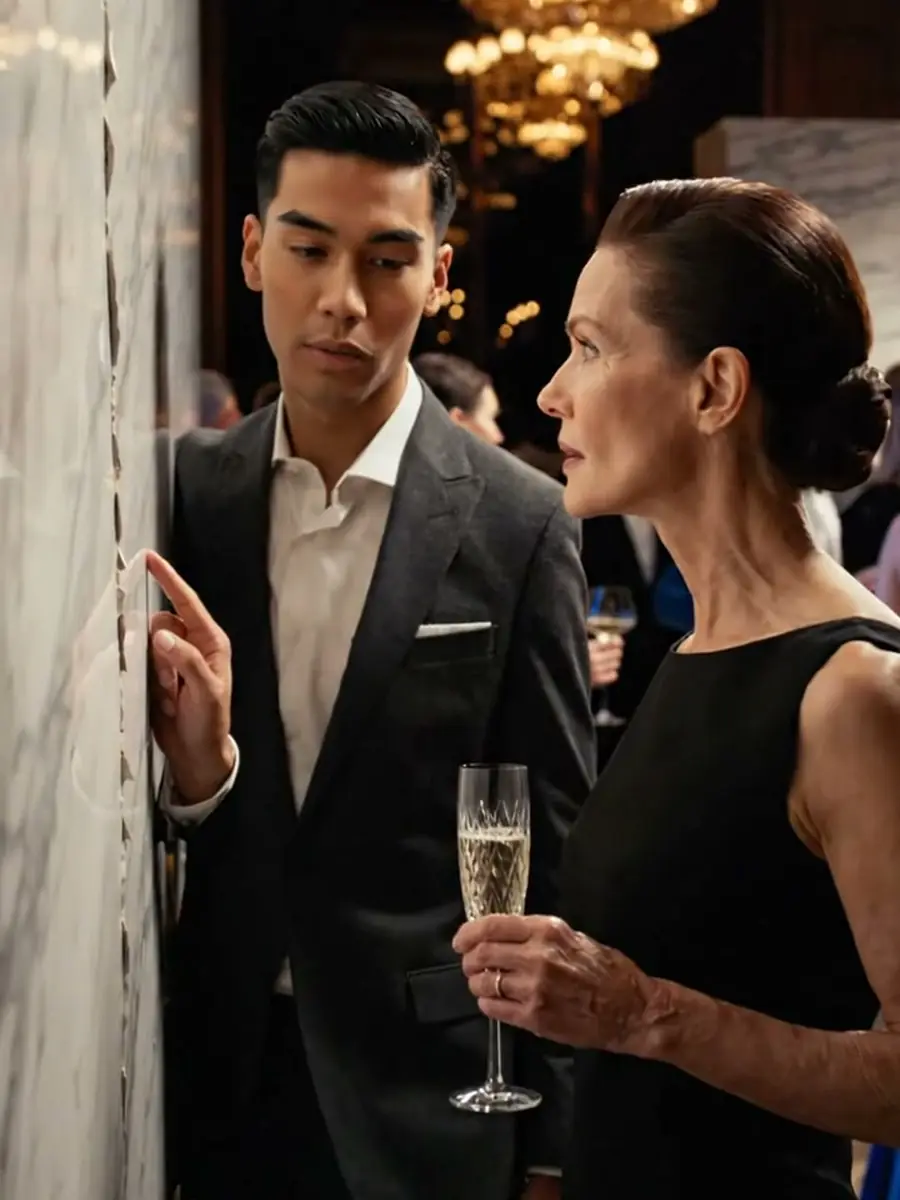
Among the glittering crowd stood Julian Whitmore, the family’s youngest heir. At twenty‑seven, Julian cut a striking figure in a tailored charcoal suit, his short dark hair slicked back, his clean‑shaven face illuminated by the soft glow of crystal chandeliers. Across the room, Elena Whitmore, his mother, glided in a midnight‑blue silk evening gown embroidered with subtle silver threads, a delicate crystal glass cradled in her hand. Their eyes met briefly, a silent acknowledgment of the night’s significance, before Julian felt an inexplicable pull toward a faded section of the gallery wall.
The Hidden Button: An Unassuming Touch
The wall in question bore a thin seam where the paint had peeled, revealing a darker undertone that seemed out of place in the otherwise flawless décor. Julian’s curiosity, a trait that had always set him apart from his polished relatives, overrode any sense of propriety. He brushed away the dust, his fingertips grazing a small, cold metal protrusion—a button, almost invisible beneath layers of neglect.
He pressed it.
A soft click resonated through the marble floor, and the wall shivered as a narrow panel slid open, exposing a dimly lit alcove that had been concealed for decades. Inside, the air was thick with the scent of aged leather and dust. An old leather‑bound ledger rested on a wooden crate, beside it a tarnished silver key, and a black‑and‑white photograph of a woman whose features mirrored Elena’s, though the name stitched into the corner of the frame—“Mara Sinclair”—was unmistakably foreign.
The ledger chronicled a series of transactions dating back to the early 1960s. The entries hinted at a clandestine adoption, offshore accounts, and sums of money that never appeared in any public record. Julian’s heart raced as the pieces of a hidden puzzle began to align. He had always sensed a subtle disconnect from the Whitmore narrative—a feeling that something essential had been omitted from the family’s polished history. The button had opened not merely a wall, but a portal to a concealed chapter of his lineage.
Unveiling the Secret: Confrontation in the Gallery
The discovery could not remain silent. Julian made his way through the murmuring crowd, each step echoing against the marble as he approached Elena, who stood at the opposite end of the gallery, her gown shimmering under the chandeliers. The music dimmed, the chatter hushed, and all eyes turned toward the unfolding drama.
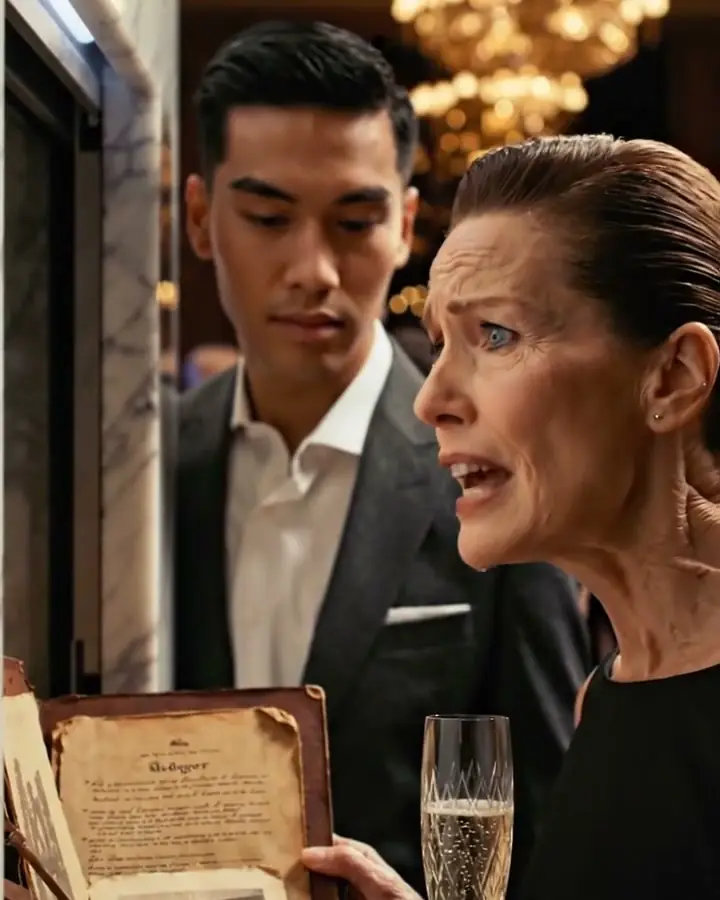
“What’s this?” Julian asked, his voice barely above a whisper, yet cutting through the ambient music with a clarity that demanded attention.
Elena’s eyes widened, a flicker of recognition crossing her face. For a moment, the polished mask of the Whitmore matriarch slipped, revealing a vulnerability that had been buried beneath decades of decorum.
“It’s been hidden for generations,” she replied, her tone a mixture of sorrow and resignation. “Your father… he was not the man you think he was.”
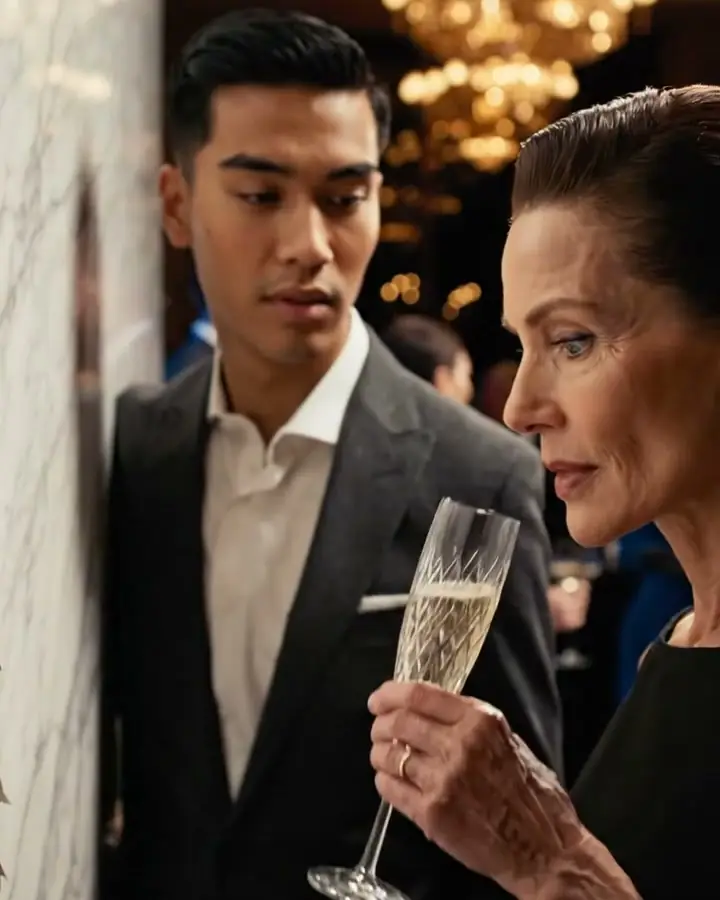
She went on to confess that Julian’s biological father had been a modest artist named Marco Sinclair, a man of humble means who had vanished under mysterious circumstances in the late 1960s. To protect Julian’s future and preserve the Whitmore legacy, Elena’s parents had orchestrated a secret adoption, erasing all traces of Marco’s existence. The button, Elena explained, had been installed by her own father—a safeguard meant to preserve the truth for a future generation, a safeguard that had been forgotten as the family’s fortunes grew.
The revelation hung in the air like a delicate perfume, intoxicating and disorienting. Guests exchanged uneasy glances, some whispering in disbelief, others clutching their champagne glasses tighter. Julian felt a surge of emotions—betrayal, curiosity, and, unexpectedly, a fierce protectiveness toward the man whose blood now ran through his veins.
A New Path Forward: Power Reclaimed, Not Revenge
Instead of seeking vengeance, Julian saw an opportunity. The offshore account documented in the ledger was tied to a charitable foundation that had lain dormant for decades—a foundation originally intended to support emerging artists, a cause close to Marco Sinclair’s heart.
Julian’s mind raced. He could expose the scandal, tear the Whitmore name asunder, and watch the empire crumble. Or he could honor the legacy of the man who had painted his world in shades of truth and compassion.
He chose the latter.
In a decisive moment, Julian turned to the assembled guests and, with Elena by his side, announced the revival of the Sinclair Art Foundation. The dormant offshore account would be reactivated, its funds redirected to scholarships for underprivileged artists, grants for community murals, and a series of exhibitions showcasing works that celebrated authenticity over opulence.
The crowd listened, stunned, as Julian’s voice resonated with a calm authority that commanded respect. He spoke of Marco Sinclair’s passion for art, his belief that creativity could bridge societal divides, and his own desire to transform a buried secret into a force for good. Elena, moved by her son’s compassion, embraced the truth, her eyes glistening with tears that reflected both grief and pride.
By the night’s end, the gala had shifted from a showcase of wealth to a moment of profound revelation and renewal. The Whitmore mansion’s marble gallery, once a stage for glittering façades, now housed a modest display of Marco Sinclair’s artworks—each brushstroke a reminder that truth, no matter how concealed, eventually finds its light.
Epologue: A New Chapter Begins
The hidden button, once a silent sentinel of family secrecy, became a symbol of transparency and redemption for the Whitmore family. The once‑imperious marble walls now bore a modest plaque, etched with the words “In honor of Marco Sinclair—artist, father, visionary.”
Julian’s decision to transform a buried secret into a catalyst for change resonated throughout New York City. Young artists, previously unheard, found a new platform for their voices. Scholarships funded by the revived foundation enabled talented individuals from underprivileged neighborhoods to study at prestigious institutions, while community murals painted across the borough’s forgotten corners breathed fresh color into the urban landscape.
Elena, freed from the weight of a concealed past, emerged as a patron of the arts, using her influence to champion projects that celebrated diversity and authenticity. The Whitmore name, once synonymous solely with power and wealth, now carried a renewed reputation—one that embraced humility, generosity, and the courage to confront hidden histories.
In the end, the button did more than unlock a wall; it unlocked a future where honesty and compassion prevailed over silence and wealth. The Whitmore mansion, its gallery now a living museum of both legacy and revelation, stands as a testament to the enduring truth that even the most carefully guarded secrets cannot remain hidden forever. And as the city’s lights flicker against the night sky, the story of Julian Whitmore and the hidden button reminds us all that the most powerful legacies are those built upon truth, humility, and the willingness to turn darkness into light.
◆ ◆ ◆
Fiction. Any resemblance to real persons or events is purely coincidental.